

Service | Fort Worth, TX
Your brakes give plenty of warning before they become a problem. Learn what the sounds and sensations mean, what a brake inspection covers, and why Fort Worth traffic and heat work your brakes harder.
Brakes rarely fail without warning. Long before there is a safety problem, most Lincolns will squeal, pulse, pull or feel different under your foot. The trick is knowing which of those signals can wait for your next service visit and which ones mean you should call today.
Fort Worth driving makes brakes work hard. Rush hour on I-30, a dozen traffic lights down Camp Bowie Boulevard and a summer full of 100 degree afternoons all add heat and wear. A little attention now keeps the pedal firm and the repair bill smaller.
Quick answer: Book Lincoln brake service if you hear squealing or grinding, feel a pulsing or soft pedal, notice a pull when stopping, or see a brake warning light. Lincoln's schedule includes a brake inspection at regular service intervals that checks pads, rotors, lines, hoses and the parking brake, and the Premium Maintenance Plan covers brake pads and linings.
Inspected
At scheduled service intervals on most Lincoln models
Wear items
Pads, rotors and brake fluid
Plan coverage
Premium Maintenance Plan covers pads and linings
In this post
What Are the Warning Signs Your Lincoln Needs Brake Service?
Your senses are the first inspection. Pay attention to what you hear, what you feel through the pedal and steering wheel, and what shows up on the dash.
Do not wait on these
Brake warning light. A red brake light can mean low fluid or a system fault. If it stays on with the parking brake released, have it checked right away.
Grinding or metal on metal sounds. This often means the pads are worn through and the backing plate is cutting into the rotor. Stop driving as much as you can and call us.
A soft or sinking pedal. A pedal that goes closer to the floor than usual can point to air or moisture in the fluid, a leak, or a hydraulic problem.
Pulling to one side when braking. A sticking caliper or uneven pad wear can make your Lincoln pull, which affects control in a hard stop.
Burning smell after normal driving. A hot, sharp smell can mean a caliper is dragging. Let the brakes cool and get them looked at.
Other signs are less urgent but still worth booking soon. A high pitched squeal often comes from a small wear indicator built into many brake pads to tell you the pads are getting thin. A pulsing pedal or steering wheel shake during braking usually points to rotors with uneven thickness or deposits.
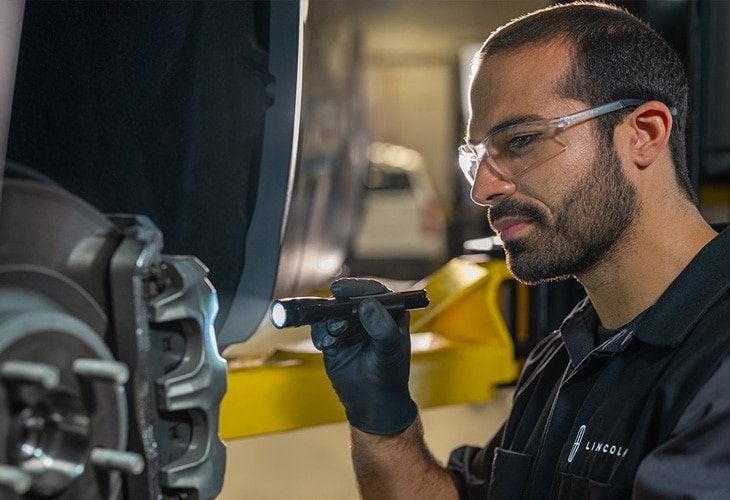
What Does a Lincoln Brake Inspection Check?
Lincoln's maintenance schedule includes a brake inspection at regular service intervals. At Hooks Lincoln, a Lincoln trained technician looks at the whole system, not just the pads.
- Friction material: how much pad lining is left on each wheel and whether the pads are wearing evenly.
- Rotors: thickness, scoring, heat spots and runout that can cause a pulsing pedal.
- Calipers: whether they apply and release smoothly, without sticking.
- Lines, hoses and connections: leaks, cracks, swelling or corrosion.
- Brake fluid: level and condition.
- Parking brake system: that it holds and releases as designed.
You get the measurements and recommendations before any work is done, so you can see how much life is left and plan ahead. Brake offers come and go through the year, so check our service specials page before you book.
Do You Need New Brake Pads, Rotors or Both?
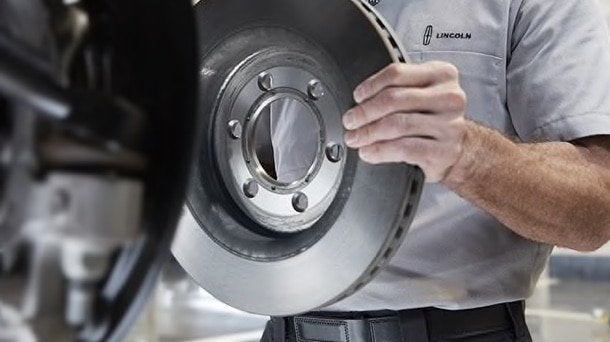
Pads and rotors work as a pair. The caliper squeezes the pads against the rotor, and friction turns your Lincoln's motion into heat. Pads are designed to wear away. Rotors wear too, only more slowly.
Pads alone are often enough when they reach their wear limit while the rotors are still within thickness specification, smooth and true. Rotors usually need replacement with the pads when they are below minimum thickness, deeply grooved, cracked, or warped enough to cause a pulsing pedal. Waiting until the pads grind is what turns a pad replacement into a pad and rotor job.
Waiting until the pads grind is what turns a pad replacement into a pad and rotor job.
Do hybrid Lincoln models wear brakes differently?
Hybrids use regenerative braking, where the electric motor slows the vehicle and recovers energy. That can extend pad life, but the calipers, rotors and fluid still age and need regular inspection, especially on vehicles that sit in Texas heat.
Schedule Brake ServicePremium Maintenance Plan
Why Does Brake Fluid Need Attention?
Brake fluid carries the force from your foot to each caliper. Over time it absorbs moisture from the air, which lowers its boiling point and can lead to corrosion inside the system. Fluid that boils under heavy braking creates vapor bubbles, and the pedal goes soft.
Your Owner's Manual lists the brake fluid replacement interval for your model. The technician checks the fluid's level and condition during a brake inspection and will tell you if it is due.
How Do Stop and Go Traffic and Texas Heat Affect Brakes?
Every stop creates heat. A highway drive across open country might use the brakes a handful of times. A rush hour trip from Arlington to downtown Fort Worth on I-30 can use them hundreds of times, with little chance for them to cool between stops.
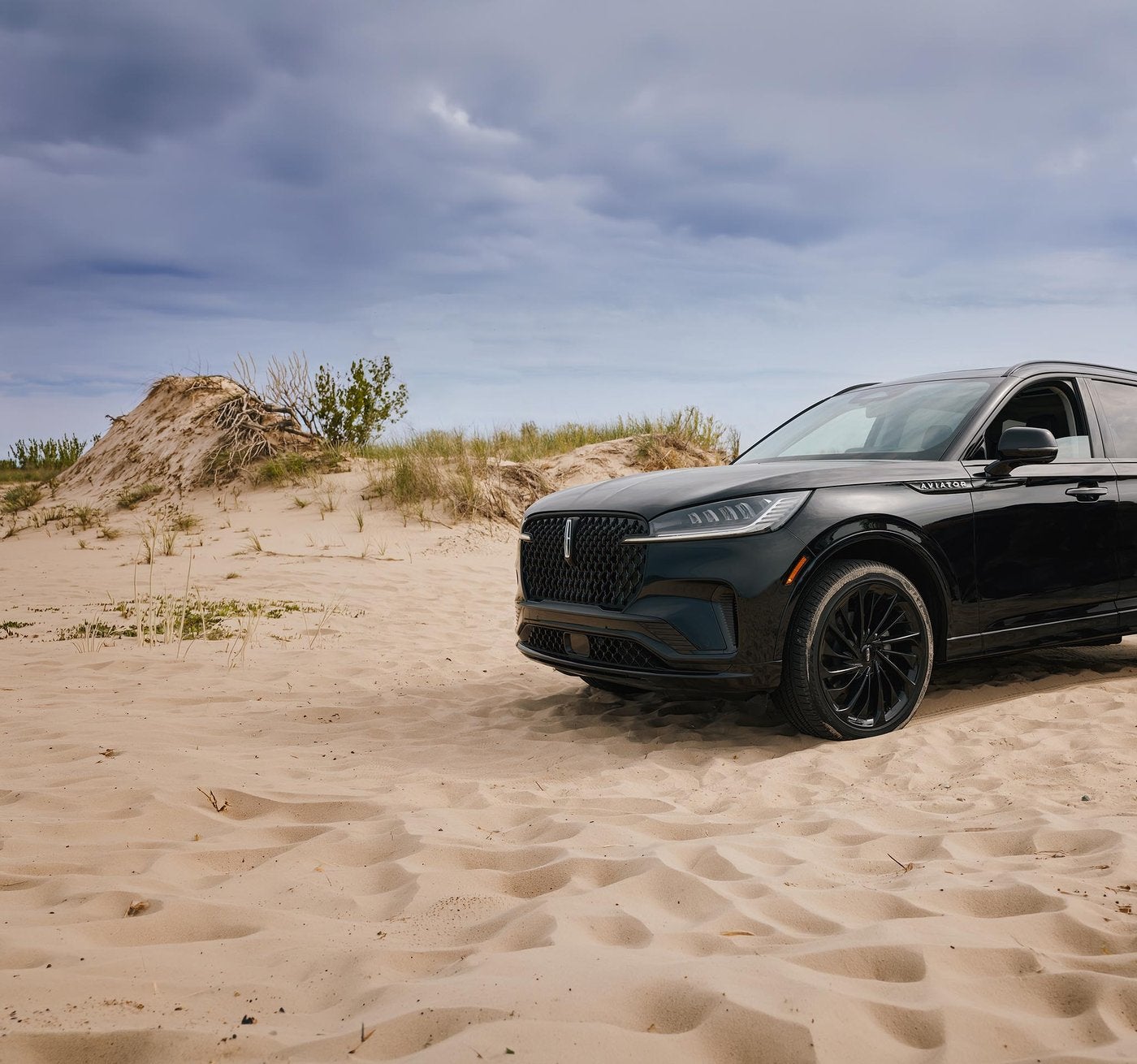
Summer adds to it. When the pavement is already hot and the air is over 100 degrees, brakes start warm and get hotter. Heavy vehicles like the Navigator and Aviator, especially when loaded with family and gear or towing a boat to Benbrook Lake, ask even more of the system.
Fort Worth driver tip
Leave a little extra following distance in stop and go traffic on I-35W and I-30 so you can ease off the gas early instead of braking hard at the last moment. It saves pads and rotors, and it keeps you out of the chain reaction fender benders that pile up during rush hour and spring storms.
How Can You Keep Brake Service Costs Predictable?
The Premium Maintenance Plan covers all scheduled maintenance plus select wear items, including brake pads and linings, shocks and struts, spark plugs, belts, hoses and wiper blades. For drivers who rack up stop and go miles, pads are one of the wear items most likely to come due, so that coverage tends to earn its keep.
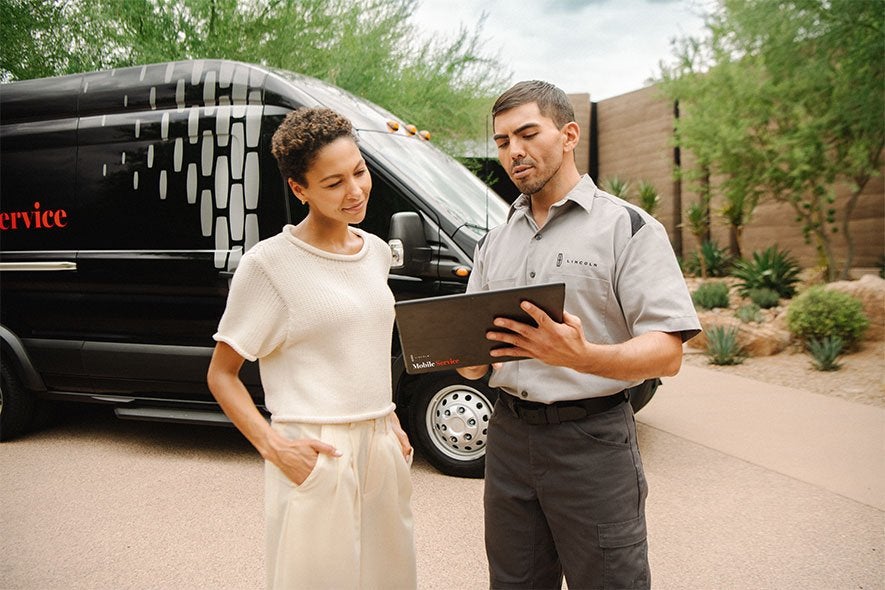
Service can also come to you. Lincoln Mobile Service lists brake services among the work it can perform at your home or office, depending on season and distance. For bigger jobs, Lincoln Pickup and Delivery is complimentary for eligible vehicles within the 4 year or 50,000 mile new vehicle limited warranty, with a complimentary Lincoln to drive in the meantime.
Book it your way
Schedule online, through the Lincoln app, or by phone at 817-596-0044. Ask about Pickup and Delivery if you would rather we come to you.
Brake Warning Signs
Why do my Lincoln's brakes squeal?
Many brake pads have a small metal wear indicator that squeals when the lining gets thin. Dust, moisture and glazed pads can also cause noise, so an inspection is the way to know.
Is it safe to drive with grinding brakes?
Grinding usually means metal is contacting the rotor, which reduces stopping power and damages parts quickly. Limit driving and book service right away.
Why does my brake pedal pulse when I stop?
Pulsing usually comes from rotors with uneven thickness or deposits on the surface. Resurfacing or replacing the rotors typically fixes it.
Pads and Rotors
How long do Lincoln brake pads last?
Pad life varies widely with driving style, vehicle weight and traffic. Heavy stop and go driving wears them faster than highway miles, so an inspection gives you a real number for your Lincoln.
Do I have to replace rotors every time I replace pads?
Not always. Rotors that are within specification and smooth can stay, while thin, scored or warped rotors should be replaced along with the pads.
Should brakes be replaced in pairs?
Pads are replaced in axle sets, both fronts or both rears, so braking stays balanced from side to side.
Brake Fluid
How often should Lincoln brake fluid be changed?
Follow the interval in your Owner's Manual for your model. Our technicians check the fluid condition during brake inspections and will let you know when it is due.
Why does brake fluid go bad?
Brake fluid slowly absorbs moisture, which lowers its boiling point and can corrode internal parts. Old fluid can lead to a soft pedal under hard braking.
Can I add brake fluid myself?
Low fluid often signals worn pads or a leak, so adding more can hide a real problem. Have the system inspected instead.
Plans and Coverage
Does the Lincoln Premium Maintenance Plan cover brakes?
The Premium Maintenance Plan covers brake pads and linings along with other select wear items. Ask our service team how it applies to your vehicle.
Are brakes covered under the Lincoln warranty?
Pads and rotors are normal wear items, so routine replacement is typically not a warranty repair. A defect in materials or workmanship may be covered, and we can check for you.
Are there brake specials at Hooks Lincoln?
Current brake offers are posted on our service specials page. They change through the year, so check before booking.
Brake Service at Hooks Lincoln
Can Lincoln Mobile Service do brake work at my home?
Brake services are on the Lincoln Mobile Service list, and availability depends on season and distance. Call us to see what can be done at your location.
How long does a brake inspection take?
It is usually part of a regular service visit. If repairs are needed, we will give you the timing before any work starts.
How do I schedule brake service in Fort Worth?
Book online, use the Lincoln app or call 817-596-0044. Hooks Lincoln is at 8900 West Freeway in Fort Worth.